Calculation of the shallow foundation thermal resistance - QuickField simulation example
Using the shallow foundation to compare with the traditional deep foundation allows reduction of the expenses on building materials, work time and the cost of the project. But in the cold climate shallow foundations require additional thermal insulation. EPS plate placed directly under the foundation is one of these methods.
How to calculate the improvement in thermal resistance of a shallow foundation from adding an insulation plate?
Answer Typical applications Geometry
Given
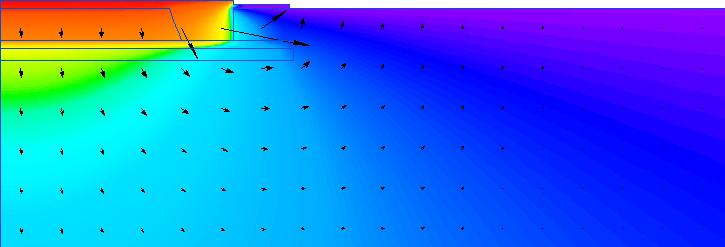
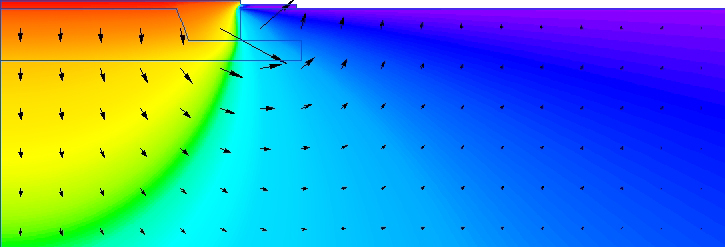
Task Solution Results Temperature distribution in the shallow foundation:
Engineering question
Adding an EPS insulation plate under the shallow foundation raises its thermal resistance and reduces heat losses compared with the uninsulated design, for the same indoor/outdoor temperature difference.
building foundations, ground-contact floors, foundation insulation systems
Download
Simulation problem
Problem Type
Steady-state heat transfer.
Temperature inside (upper edge of the foundation): T1 = +20 °C;
Temperature outside (ground surface): T2 = -20 °C;
Compare thermal resistance of the shallow foundation with the insulation plate and without the plate.
Thermal resistance can be calculated as a ratio of the temperature difference value and the heat flux value.
Insulation plate reduces heat losses by 10%:
Design
Temperature difference (°C)
Heat flux (W)
Thermal resistance(°C/W)
Insulated
40
72.97
0.55
Without insulation
40
81.15
0.49
Video
Related examples